
Your team doesn't need more capacity: it needs visibility. The operational mistake made by 9 out of 10 companies.
When operating results fall short, the most common reaction from the CEO or COO is to think that the problem lies with the team's capabilities:
"We need to hire someone more senior"
"My team isn't up to the task"
"Maybe we need to replace the entire department."
As a fractional COO, I have heard this same story time and time again. And it's understandable: when business isn't moving forward, anxiety grows and it's tempting to blame people. But after working with dozens of startups and growing SMEs, I can tell you one thing with absolute clarity:
The problem is almost never capacity. The problem is lack of visibility.
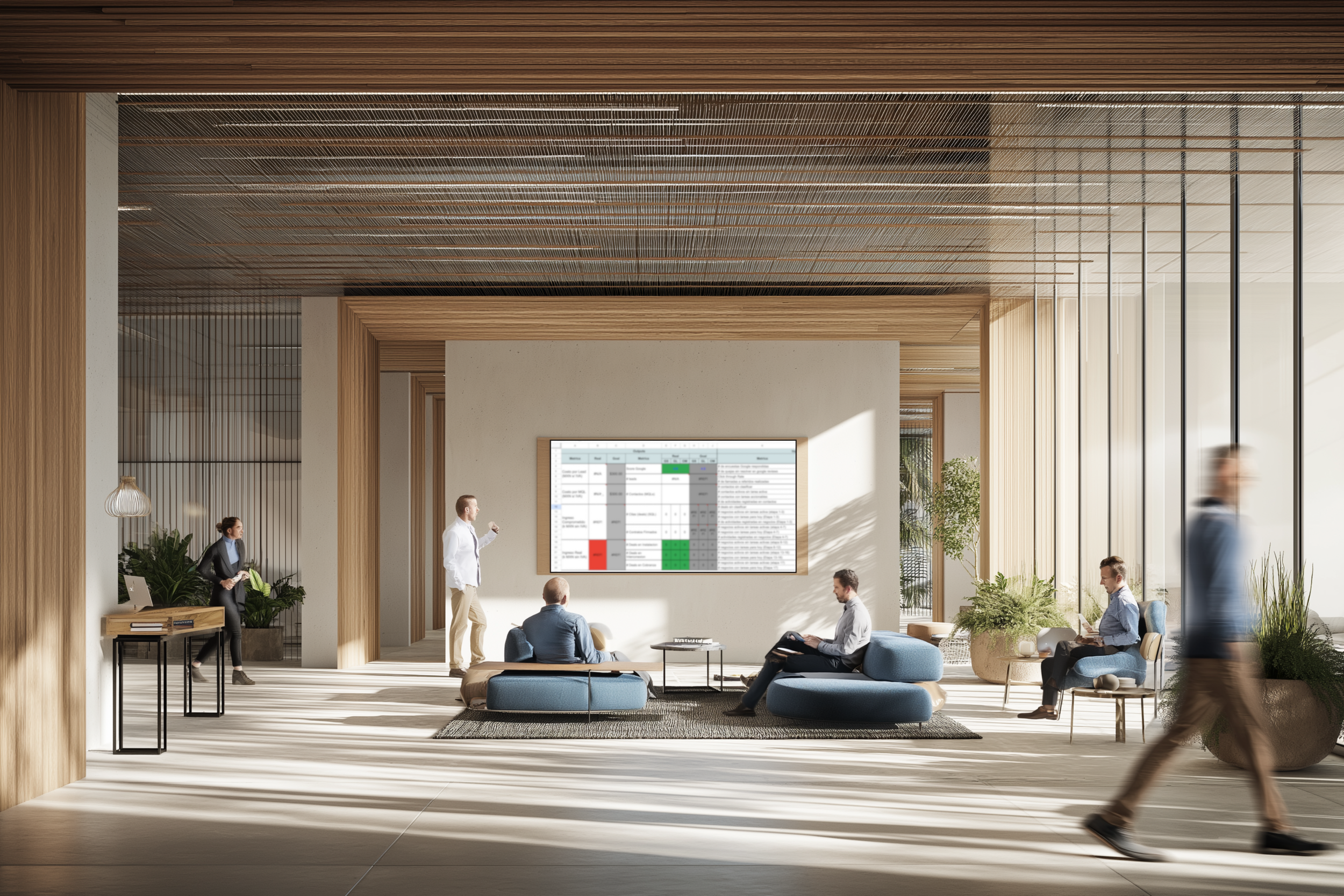
The real obstacle is not skill: it is flying blind.
Imagine you're driving a race car... but the dashboard is covered. You can't see your speed, fuel level, engine temperature, or warning lights. Would you win the race? Would you even make it to the finish line?
This is how most operations teams work today:
Purchases that are uncertain whether they are delayed or on schedule.
Logistics that perform tasks without knowing what impact they have.
Maintenance operating without a standard of "work well done."
Supervisors lacking clarity on what to measure, when to act, or how to prioritize.
And here comes the critical part:
Often, neither the CEO nor the COO has granular clarity on the actual state of operations. They have a strategic vision, yes, but not a daily translation of that vision into actions, metrics, and priorities.
If management cannot define "what winning looks like," how can we expect the team to do so?
The tool that changes everything in 30 minutes a day.
The good news is that this does NOT require:
Hiring expensive talent
Lay off half the team
Software worth millions
Reorganize the entire company
The solution is surprisingly simple and comes from Lean Manufacturing, the methodology used by leading companies such as Toyota, Danaher, Honda, and thousands more. It is called Daily Direction Setting (DDS), and it works like this:
1. A visual board with two colors
Green = we're doing well
Red = something requires attention today
No complicated charts. No vanity metrics.
2. A daily 30-minute meeting
The team reviews:
What turned red yesterday?
What turned red this morning?
Who is attending to him?
When will it be resolved?
It is a meeting to resolve issues, not to discuss them.
3. Transparent communication and real accountability
Everyone—from the operations leader to the newest employee—knows:
What is measured
What success looks like
What to do when something goes wrong
Clarity replaces anxiety. Action replaces speculation.
The result? Transformation in less than 4 weeks.
Teams that seemed "incapable" suddenly become high-performing teams. Not because they learned new skills, but because they can finally see:
What's up?
Where are the problems?
Who should take action
When to do it
How to measure if it worked
Autonomy flourishes. Responsibility becomes natural. Operation becomes predictable.
And the CEO finally feels that he has a company under control.
HAVA: We implement visibility, operational discipline, and Lean culture for growing startups.
At HAVA, we help startups, scaleups, and SMEs build world-class operating systems without drama, without excessive workload, and without hiring talent they don't need. Especially for companies in the seed, pre-seed, series A, or accelerated growth stages.
If today you feel that:
Your team works hard, but the results are not coming
You're not sure what's wrong.
You feel that "something is out of control."
You suspect you need to hire more people, but you're not sure.
So what you lack is not ability. What you lack is visibility.
And we can help you build it.