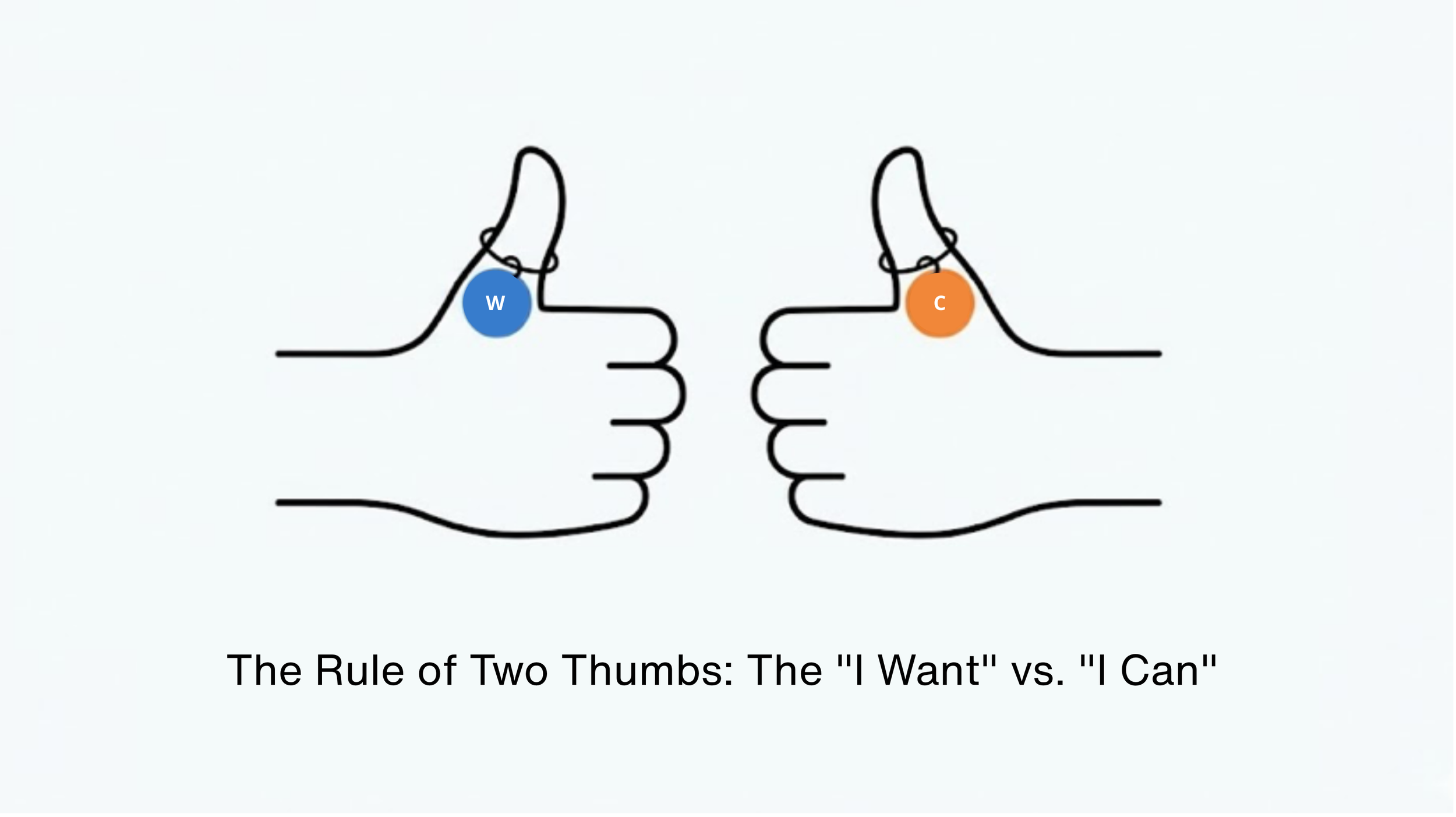
The Two Thumbs Rule: The "Want" vs. "Can" dilemma.
One of the simplest and most effective visual tools for assessing an individual's potential for success on your team is the Rule of Two Thumbs.
Imagine each member of your team standing in front of you, and like Caesar in the Colosseum, hold your hands in front of you with your thumbs horizontal and evaluate:
👍 Right thumb up: Indicates that the person "wants" (willingness, commitment).
👍 Left thumb up: Indicates that the person "Can" (Skill, ability).
When both thumbs are up, you have a "Rockstar." But what happens when you can only raise one?
The danger of "Can but Won't".
This is the most misleading scenario. You have someone who is capable and delivers results, but they are unpredictable and you most likely don't enjoy working with them.
Even if we try to investigate the root cause of their disinterest, the reality is often harsh: it is risky to keep them.
I have often seen how this dynamic turns into a relationship of "negotiating with terrorists" who push the limits.
Many leaders have a "toxic relationship" with these people, breaking their own corporate rules just to prevent this individual from leaving. If this describes your situation, realize that it's time to part ways. The peace and culture of your team are worth more than individual output in the long run.
The "Wants to but Can't" Opportunity.
On the other hand, there are those who lack the current technical skills but clearly "want" to learn and have a positive impact on the culture. This is a resource worth saving, but it requires strategy:
Clear Rules (PIP): Establish a realistic and challenging Performance Improvement Plan.
Autonomy with Support: The individual must take ownership of their improvement plan (seeking mentors, training, etc.). If they truly "want" it, the follow-up work for the manager should be minimal.
Transparency and Security: Here's the secret. When you start the PIP, you should begin recruiting a potential replacement and be transparent with the employee about it.
This strategy protects the organization. If the employee fails to get the "Can" thumbs up, you already have a replacement ready and you don't put the operation at risk. But if you succeed, you will have forged a loyal, grateful, and highly capable employee (and you will have a talent pipeline for the future).
Conclusion: Don't settle for just one thumb. Eliminate the toxicity of those who don't want to and give a structure for growth (or a safe exit) to those who can't.